Friday, April 13, 2012

Library Rules, 1799

Ever wonder what library rules were like in 1799, soon after the founding of the University of North Carolina library? In this gem of an entry from the General Faculty and Faculty Council Records, the Board of Trustees write the rules for the library. Notice that some things never change: reference books remain in the library for the most part, call slips go out with books, and fees are paid for “defaced” books.

Of the library and librarian

1. There shall be a room appropriated to the library, apparatus and curiosities of the University. Shelves shall be put up in it, at the expence of the board. Fire shall be made and kept up in the room once every week for two hours, by order of the librarian, and then be entirely extinguished. And no person but a trustee or member of the faculty shall be admitted into the room of the library, without the presence of the librarian: but either of these shall be admitted whenever they require it.

2. The librarian shall be appointed by the faculty every half year, who shall make a report to them as often on the state of the library. He shall also account to the treasurer of the board for the monies he has received as librarian.

3. Every student on the establishment of the university, may use the books of the library on paying fifty cents into the hands of the librarian for the session in advance. The encyclopedia shall not be taken out of the library by any student not belonging to the senior or junior classes; and no other shall ever consult them, except in the presence of some member of the faculty.

4. The librarian when he delivers a book out of the library to a student shall write a receipt for the book which shall be signed by the student who takes it out.

5. A volume shall not be kept out of the library more than three weeks, without being returned to the librarian and the receipt of it renewed. And if any other person shall want the volume at the end of that time the person who has before had it, shall not be at liberty to take it out again at that time.

6. If a student who shall take a volume from the library, shall by any means, deface or abuse it, he shall pay according to the damage done, as estimated by the faculty even to the replacing of the set; and if he shall lose it he shall pay the librarian for it, the price at which the faculty shall value the set, or else he shall replace the whole as before. If he shall not return it in three weeks after taking it out of the library, he may be deemed to have lost it, and the faculty may proceed accordingly. If the student shall refuse to comply with the decisions of the faculty, he shall be admonished, suspended or expelled as the nature of the case may require.

7. The librarian shall keep a book in which he shall have a catalogue of all the books of the library. And if any book shall be presented to the university, the name and place of residence of the donor shall be recorded.

8. The librarian shall appoint a day and hour for giving books out of the library, and he shall attend once a week at the time appointed for that purpose.

9. If books be hired from the library, the price to be paid shall be fixed by the faculty, and the person who obtains the book shall pay in advance.

Originally published at University Archives at UNC-Chapel Hill.

Wednesday, April 11, 2012

Eleven Thank You Notes From Famous People

Once upon another time (1974), John Lennon showed up drunk to LA’s Troubadour club and proceeded to heckle the Smothers Brothers during their act. A fight ensued which involved just about everyone, including actress Pam Grier. The next day, she got this letter from Lennon:


After reading Yann Martel’s book Life of Pi with his daughter, President Obama sat down to write this short note of thanks.


Nine more at Mentalfloss.

It's National Bookmobile Day!


National Bookmobile Day (Wednesday, April 11, 2012) celebrates our nation’s bookmobiles and the dedicated library professionals who provide this valuable and essential service to their communities every day.

National Bookmobile Day is an opportunity for bookmobiles fans to make their support known—through thanking bookmobile staff, writing a letter or e-mail to their libraries, or voicing their support to community leaders.

National Bookmobile Day is coordinated by the ALA Office for Literacy and Outreach Services (OLOS), the Association of Bookmobile and Outreach Services (ABOS), and the Association for Rural & Small Libraries (ARSL).

And a whole bunch of bookmobile videos here!

DOJ may sue Apple, publishers over e-book pricing

The Justice Department may sue Apple and possibly two publishers over alleged price-fixing of e-books for the iPad as soon as Wednesday while reaching settlements with other publishing houses, a knowledgeable source confirmed to POLITICO.

The suit is the result of a lengthy investigation into allegations that Apple and five major publishers coordinated the pricing structure of e-books, as Apple sought to enter a market dominated by Amazon and its Kindle e-reader two years ago.

The publishers that have been under investigation are Simon & Schuster, HarperCollins Publishers, Hachette Book Group, Pearson and Macmillan.

Several publishers have been engaged in settlement talks with DOJ, while Apple has not participated, a source told POLITICO. However, the DOJ was said to be readying cases against possibly two of the publishers.

Apple declined to comment. The Justice Department also declined to comment. The five publishers could not be reached.

Full story at Politico.

Monday, April 09, 2012

19 Regional Words All Americans Should Adopt Immediately

1. whoopensocker (n.), Wisconsin
You know when something’s wonderfully unique, but the words “wonderful” and “unique” don’t quite cut it? That’s why the Wisconsinites invented whoopensocker, which can refer to anything extraordinary of its kind—from a sweet dance move to a knee-melting kiss.

2. snirt (n.), Upper Midwest
A gem of a portmanteau, this word means exactly what it sounds like: a mixture of windblown snow and dirt. Also, for your linguistic pleasure, try out the adjective version: snirty.

3. slug (n. or v.), Washington, D.C.
In addition to describing that shell-less snail-looking creature, a “slug” describes a traveler who hitches a ride with someone who needs passengers in order to use a High Occupancy Vehicle lane. The verb form, “to slug,” refers to the act of commuting in that manner. In New Hampshire, to gee-buck means something similar: to hitch a ride on the back of someone else’s sleigh.

4. wapatuli, (n.), Wisconsin
Nearly everyone who has been to college in America has either concocted, or been an unfortunate victim of, wapatuli: a homemade alcoholic drink with any combination of hard liquors or other beverages—Mountain Dew, white wine and vodka, anyone? A wapatuli can also refer to the occasion at which that jungle juice is consumed. In Kentucky, the (perhaps more onomatopoeically correct) word for terrible liquor is splo, while in the mid-Atlantic, whiskey—especially the moonshine variety—is ratgut.

5. arsle (v.), Kentucky, Virginia, Missouri, Pennsylvania, Arkansas
Depending on the state, this word can mean a few things—to fidget, to back out of a place or situation, or to loaf around restlessly—pretty much all of which describe my activities on an average Sunday afternoon. (In Maine, instead of arsling, I might putty around, and in Vermont, I’d pestle around, but either way, it still means not a whole lot is getting done.)

6. jabble (v.), Virginia
You know when you’re standing at your front door rifling through your purse for fifteen minutes because you can’t find your keys again? That’s because all the stuff in your purse got all jabbled up. This fantastic little word means “to shake up or mix,” but it can also be used less literally, meaning “to confuse or to befuddle.”

7. sneetered (v.), Kentucky
If you’ve ever been hoodwinked, duped, swindled, fleeced or scammed, you done been sneetered. The noun version, sniter, refers to that treacherous person responsible for your unfortunate sneetering. Also see snollygoster, a shameless, unscrupulous person, especially a politician.

8. slatchy (adj.), Nantucket
This lovely little word describes the sky during a fleeting moment of sunshine or blue sky in the middle of a storm. The noun version, slatch, refers to that moment itself.

9. snoopy (adj.), Maryland, Pennsylvania
A more interesting way of saying someone’s picky, especially with regards to food.

10. arky (adj.), Virginia
This word refers to Noah’s Ark, not to Arkansas, so if someone calls your style arky—old-fashioned, or out of style—you can accuse them of being an anti-antediluvianite. (Which, full disclosure, is not technically a word, but should you ever actually employ such a comeback, you will win like a million gold stars in Nerdland.)

11. faunch (v.), South Midlands, West
Meaning to rant, rave or rage, this fairly well describes what many Americans have been doing while watching cable news. (Also, try out the phrase, faunching angry, when describing the guy whose parking spot you just snaked.)

12. chinchy (adj.), South, South Midlands
Not as direct as “cheap,” and less erudite than “parsimonious,” this useful word perfectly describes your stingy friend who never chips in for gas.

13. larruping (adv.), Oklahoma, South Midlands
You know when food tastes so freakin’ delicious, but “yummy,” “scrumptious” and “tasty” just don’t do it justice? That’d be a good time to break out this fabulous word, used most often in the phrase “larruping good.”

14. mizzle-witted (adj.), South
This satisfyingly Dickensian word means “mentally dull,” but depending on where you are in the country, mizzle can also be used as a verb meaning “to confuse,” “to depart in haste” or “to abscond,” or as a noun meaning, “a very fine or misty rain.“ So, if you were a mizzle-witted burglar, you might break into a house, get mizzled, trip the alarm, and then mizzle with your loot into the mizzle. Sans raincoat.

15. burk (v.), Georgia, South
More fun than the word “vomit” and more polite than the word “fart,” this utilitarian verb describes both activities. Just be happy that if you’re in West Virginia, you don’t get the skitters—an Appalachian version of Montezuma’s revenge.

16. snuggy (n.) Iowa, Midlands
Those of us who grew up with older brothers are intimately familiar with what it is to suffer from a snuggy—a friendlier word for a wedgie.

17. jasm (n.), Connecticut
Meaning “intense energy or vitality,” the sentence provided in the dictionary was so good, I wanted to share it with you all, too: “If you’ll take thunder and lightening, and a steamboat and a buzz-saw, and mix ‘em up, and out ‘em into a woman, that’s jasm.”

18. mug-up (n.), Alaska
When Alaskans take a break from work, grab a pastry or a cup of joe, and gaze out at Russia, they’re enjoying a “mug-up”—their version of a coffee break.

19. bufflehead (n.), Pennsylvania (mountains)
You would have to be a real bufflehead if you didn’t think this word, meaning a fool or idiot, is not an awesome insult. Also, for your consideration, the related adjective buffle-brained.

Found at Mental Floss.

Friday, April 06, 2012

The Worst Baseball Cards in History


Many more over at The Daily Mail.

A more realistic look at Google's Augmented Glasses concept (video)

Daily life: March 2012 - The Big Picture (photo essay)


Nearly 2,000 images moved across the wires last month under the category “daily life.” Many of those slice-of-life images came from the 1,400 newspapers in the United States that make up the Associated Press, as well as AP staff photographers, but also from Getty Images, Reuters, and AFP. Some of the images are surprising, some dramatic, and others just an interesting view of something quite ordinary. They may not be photographs that fit into any particular news category or event, but we'd hate not to share them with you, so we're adding an occasional feature on The Big Picture blog: daily life captured around the globe. 31 more here.

Joel Robinson’s Whimsical Photographic Abstractions of the Joy of Reading

Some of Joel’s prints, though sadly not the reading ones, are available on Etsy. You can see more of his wonderful work on his Flickr stream.

(Via Brain Pickings.)

The teen-age literary crushes of 30 popular writers

What books do you cringe at having loved? Nadia Chaudhury collects the teen-age literary crushes of 30 popular writers.

From the site:
"First book crushes: The feelings are so strong and obsessive. The books seem smart, sophisticated, cool; the characters in them say and do such great things, they seem like guides sent to teach you how to be that way too. But then the crush goes, and the object of one's former affection becomes an embarrassment—or at least the memory of you quoting them so seriously does. To explore this phenomenon, we asked an assortment of literary-inclined people to revisit the books they loved back in the day, the ones that make them absolutely cringe today."

People who read e-books read more


People who read e-books read more books than those don't. According to Pew, as the number of Americans that own tablet computers and e-book reading devices has increased, so has the percentage of adults who report that they have read an e-book in the past year.


Full report at the Pew link.

Thursday, April 05, 2012

We need your help


Please "like" our new library/student facebook site. We are trying to break 100 "likes" today.

Thanks in advance! LINCCWeb.org

Google's augmented reality glasses project

From the announcement on Google+:
"We think technology should work for you—to be there when you need it and get out of your way when you don’t.

A group of us from Google[x] started Project Glass to build this kind of technology, one that helps you explore and share your world, putting you back in the moment. We’re sharing this information now because we want to start a conversation and learn from your valuable input. So we took a few design photos to show what this technology could look like and created a video to demonstrate what it might enable you to do."

Here is how it coould work:

Future of Apps and Web. Pew Internet & American Life Project

From the overview:
The Web Is Dead? No. Experts expect apps and the Web to converge in the cloud; but many worry that simplicity for users will come at a price.

Tech experts generally believe the mobile revolution, the popularity of targeted apps, the monetization of online products and services, and innovations in cloud computing will drive Web evolution. Some survey respondents say while much may be gained, perhaps even more may be lost if the “appification” of the Web comes to pass.

Link to the full report (PDF):

Wednesday, April 04, 2012

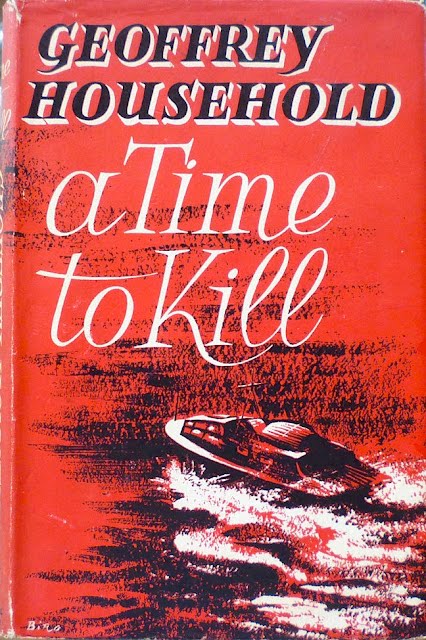
Beautiful British Book Jacket Design of the 1950s and 1960s

Presenting a permanent, ever-expanding gallery page of dozens of the most gorgeous British dustjackets ever to wrap around books in the 1950s and 1960s, especially crime and spy thrillers and science fiction.


Full collection here.

Monday, April 02, 2012

The Altered Bibles of Linda Ekstrom

Circling Altered Bible 9d x 9w x 9h


bi·ble/ˈbībəl/

Noun:
  1. The Christian scriptures, consisting of the Old and New Testaments.
  2. The Jewish scriptures, consisting of the Torah, the Prophets, and the Hagiographa.

For the believers it is the word of god. For others it is a tool of oppression and for some simply a book of stories taken way too literally.

Homeland, 2001. Altered Bible 6d x 12w x 2.5h inches


For Linda Ekstrom it is the foundation of her 'Word' series. Why not start at the source.

Ekstrom is no heathen, her work "is a direct extension and materialization of [her] religious practice and interest in Jewish and Christian tradition."

Ekstrom says "My work is anchored in the book, the book as a cultural and a symbolic object, and as a container of history, narrative and memory. The Bible, as the primary book of Western culture and central to my tradition, is the book I alter and transform into sculptures."


Book of Night (detail), 2002. Bible, coated in ink 6d x 2h x 5w inches


She goes on: "my altered Bibles insist that interpretation must remain open; they serve as visual symbols against fundamentalism, defying a singular, literal read by rearranging the order into myriad possibilities."

Effusion, 2003. Altered Bible 15d x 18w x 36h inches


Imprint, 1999. Altered Bible8.5d x 5w x 6h inches (shown wall mounted)


Opere Apum, 1996. Bible, wood,honeycomb, 10 x 14 x 2.5 inches


(Via Book Patrol.)

Inaugurated by the Academy of American Poets in 1996, National Poetry Month is now held every April, when publishers, booksellers, literary organizations, libraries, schools and poets around the country band together to celebrate poetry and its vital place in American culture. Thousands of businesses and non-profit organizations participate through readings, festivals, book displays, workshops, and other events.


More info here.