Tracking innovation, development and experimentation in information studies and library science and spotting new technologies, trends, fun stuff and much more.
Thursday, December 08, 2011
From Frida Kahlo to Freud, Finger Puppets of Cultural Icons
Future Fossils: A reminder of our own technosphere's doomed frailty.
From Boing Boing.
The Bughouse Future Fossils series are a set of highly detailed, weathered concrete castings of near-contemporary technology, from DJ turntables to film cameras to Atari joysticks. They're a nice memento mori -- a weighty-but-whimsical reminder of our own technosphere's doomed frailty.Several more at the link.
Wednesday, December 07, 2011
Now You Can Sleep Inside a Giant Book
FieldCandy has designed its Fully Booked tent to look like an open book. Lots of other interesting and clever designs there, too.
Via Gizmodo.
Edmund Wilson Regrets....
Unluckily for Wilson, news of his unique rejection list quickly circulated, and he was soon inundated with requests for the rejection itself.
From Lists of Note.
Flipboard launches on iPhone, iPod Touch, introduces 'Cover Stories' feature
Flipboard has now arrived on a slightly smaller board. Previously available as an iPad-only affair, the popular magazine and social media app has now launched on both the iPhone and iPod Touch, bringing graphics-laden aggregation to a wider swath of the iOS community. This new universal version features much of the same functionality you'll find on its iPad predecessor, along with a new Cover Stories interface, which collects and displays all your recent photo uploads, shared articles and status updates from select social networks. If you're intrigued, you can download it for free at the source link, below.
(Via Engadget.)
Tuesday, December 06, 2011
Instantly Redecorating a Living Room with Video Mapping
From Laughing Squid via The Awesomer.
Kadinchey: A remix of sights and sounds recorded around Bhutan.
Four million children in the UK do not own a book
The proportion of children without books is increasing, the charity said. It is now one in three, compared with one in 10 in 2005.
Children with their own books were more likely to be above-average readers and do better at school, the study of 18,000 children suggested.
Poorer children and boys were less likely to have books, it added.
The survey was carried out in September with school-aged children from 111 schools across the UK. It suggested that a third (33.2%) did not have books of their own. That translates to 3.8m children UK-wide. Better off children and young people were more likely to say they had books of their own, compared with those who received free school meals.
'Missing opportunities'
Trust director Jonathan Douglas said the steep rise in the number of children without their own books was of particular concern. He said: "We know there is a direct correlation between book ownership and children's reading abilities.
Children's illustrators donated card designs to the literacy appeal
"With one in 6 in the UK struggling with literacy it is very worrying that many children could be missing out on opportunities to develop these essential skills."
The trust said that children who owned books were more likely than others to read every day, and that book ownership had a clear link with reading ability.
Of the children and young people with books of their own, more than half read above the level expected for their age, with fewer than one in 10 reading below the level.
By contrast, among those without books of their own, nearly a fifth were failing to meet the expected reading level, with only a third reading above that level.
The trust launched the survey to coincide with an appeal for public donations towards books and reading support for disadvantaged children.
A number of children's book illustrators have designed cards to support the trust's Christmas Gift of Reading campaign.
The survey also revealed links between reading ability and receiving books as presents.
About a fifth of children said they had never been to a book shop or a library.
But the survey also showed that reading any type of material, for example magazines, outside class at least once a month was also associated with greater reading attainment.
The Kindle Fire is definitely NOT ready for prime time.
And, he didn't like it either, saying:
- It is heavy and awkward to hold
- Everything is much too small on the screen, leading to frequent tap errors and accidental activation.
- The lack of button controls is just wrong.
- The magazine reading experience could be good but actually is miserable.
- Screen updates are too slow.
- And, generally, the Kindle Fire suffers from plain old bad UI design in many areas
Monday, December 05, 2011
'84 Charing Cross Road' revisited
84, Charing Cross Road is a 1970 book by Helene Hanff, later made into a stage play, television play and film, about the twenty-year correspondence between her and Frank Doel, chief buyer of Marks & Co, antiquarian booksellers located at the eponymous address in London, England.
Hanff, in search of obscure classics and British literature titles she had been unable to find in New York City, noticed an ad in the Saturday Review of Literature and first contacted the shop in 1949, and it fell to Doel to fulfill her requests. In time, a long-distance friendship evolved, not only between the two, but between Hanff and other staff members as well, with an exchange of Christmas packages, birthday gifts, and food parcels to compensate for post-World War II food shortages in England. Their letters included discussions about topics as diverse as the sermons of John Donne, how to make Yorkshire Pudding, the Brooklyn Dodgers, and the coronation of Elizabeth II.
The Telegraph has a charming article recalling the correspondence that is well worth a read.
Friday, December 02, 2011
Libraries: Where It All Went Wrong
Nathan Torkington has published the text of his address the National and State Librarians of Australasia on the eve of their strategic planning meeting in Auckland at the start of November this year. It is his contention that libraries aren’t the great sources of knowledge and information on the web that they were in the pre-Internet days. This should pique your interest:
Libraries are like Microsoft.You can read the entire essay online here, or download the PDF here.
At one point you had a critical role: you were one of the few places to conduct research. When academics and the public needed to do research into the documentary record, they’d come to you. As you now know, that monopoly has been broken.
The Internet, led by Google, is the start and end of most people’s research. It’s good enough to meet their needs, which is great news for the casual researcher but bad news for you.
Now they don’t think of you at all.
Oh yes, I know all the reasons why the web and Google are no replacement for a healthy research library. I know the critical importance of documentary heritage. But it’s not me you’re talking to at budget time. It’s the public, through the politicians.
They love public libraries, in our country at least. Every time a council tries to institute borrowing fees or close libraries, they get shot down. But someone tries, at least once a year. And England is a cautionary tale that even public libraries aren’t safe.
You need to be useful as well as important. Being useful helps you to be important. You need a story they can understand about why you’re funded.
Oh, I know, you have thought about digital a lot. You’ve got digitisation projects. You’re aggregating metadata. You’re offering AnyQuestions-type services where people can email a librarian.
But these are bolt-ons. You’ve added digital after the fact. You probably have special digital groups, probably (hopefully) made up of younger people than the usual library employee.
Congratulations, you just reproduced Microsoft’s strategy: let’s build a few digital bolt-ons for our existing products. Then let’s have some advance R&D guys working on the future while the rest of us get on with it. But think about that for a second. What are the rest of us working on, if those young kids are working on the future? Ah, it must be the past.
So what you’ve effectively done is double-down on the past.
Text reproduced under Creative Commons by Share Alike.
Blackstock's Collections: The Drawings of an Artistic Savant
Blackstock is autistic and an artistic savant. He creates visual lists of everything from wasps to hats to emergency vehicles to noisemakers. In the spirit of the Outsider art of Henry Darger and Howard Finster, Blackstock makes art that is stirring in its profusion and detail and inspiring in its simple beauty. He has never received formal artistic training, yet his renderings clearly and beguilingly show subtle differences and similaritiesenabling the viewer to see, for example, the distinctive features of a dolly varden, a Pacific Coast steelhead cutthroat, and fourteen other types of trout.
Each collection is lovingly captioned in Blackstock's unique hand with texts that reflect facts from his research as well as his passions and preferences. Blackstock's Collections contains over 100 extraordinary examples of his splendidly original taxonomy, offering a unique look inside the mind of a man making sense of life through art. His collected drawings include:
- Monsters of the Deep
- Major Forestry Pests
- The Great Cabbage Family
- The Spatulas
- The World War II U.S. Bombers
- The Buoys
- King Sized Jails
- Monsters of the Past
- Classical Clowns
- Great Italian Roosters
- Our State Lighthouses, and
- The Irish Joys
Hogwarts library date due card
Even after consulting several librarians here we could not think of an "official" name for these wonderful little cards that resided in pockets in the front of books in the days before computers, so we called it the "check-out card". Turns out it is actually called a "date due card". Thanks Brodart.
Thursday, December 01, 2011
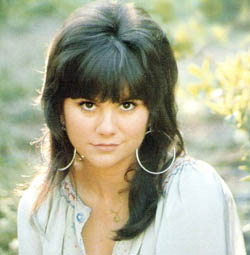
Linda Ronstadt Announces Memoir 'Heart Like A Wheel'
The publisher announced today that it had acquired her autobiography, titled "Heart Like a Wheel," named after her Grammy-winning album.
Ronstadt sold tens of millions of records starting in the 1970s with pop hits like "You're No Good" and "When Will I Be Loved." But she also segued into country, pop standards, among other genres.
Fascinating short documentary of Steve Jobs' NeXT years
Found at Boing Boing.
Wednesday, November 30, 2011
BMW Book Lets Fans Read While Driving
BMW will only be producing and distributing 1,488 copies of Culture, with every copy numbered, emphasizing its rarity and exclusivity.
Via psfk.
Inside the libraries of famous writers (photo set)
17 more at Flavorwire.
On the 111 anniversary of the death of Oscar Wilde a video commentary
Found at Brain Pickings
Neil Gaiman offers advice to young writers (short video)
Via Libraryland.
The Florida Disabled Outdoors Association: Please follow on Twitter
I am fortunate to be associated with the Florida Disabled Outdoors Association. They have just launched their Twitter account and they need followers. I suspect there will be less than two or three posts per day, but a larger following would help them immensely with funding requests.
Please follow at: FDOA7 It would mean a lot to me personally if you would give them a hand and pass it on! Thanks to you all!
Since it’s inception in 1990, the FDOA has promoted accessible recreation to persons with disabilities as well as the general public through special events, newsletters and community education.
The FDOA has been instrumental in many successful projects and programs with agencies that include:
- U.S. Fish and wildlife Service – accessibility training for wildlife refuge managers from fifteen states.
- Saint Marks Wildlife Refuge – designed and implemented mobility impaired hunting program and FDOA volunteers host the event every year; consulted for design of courtesy boat dock facility.
- Florida Department of Environment Protection – consulted and assisted in the creation of ADA compliance and self-evaluation program.
- Department of Environmental Protection /Parks and Recreation – assisted in on-site evaluation of all District II State Parks. Served on strategic planning committee; member state park group- users advisory board; ADA committee member for Friends of State Parks.
- Florida Game and Fresh Water Fish Commission – assisted in evaluation and consultation of accessible state boat ramps, assisted in design of accessible fishing facilities; also directly responsible for development and expansion of mobility impaired hunt program.
- Florida Water Management Districts and Eglin Air Force Base – initiated and assisted in development of mobility impaired hunt programs.
- Hands Helping Anglers – as a committee member, expanded fishing derby for disabled anglers, now over fifty per year.
- City of Tallahassee Parks and Recreation – assisted in self-evaluation of city parks and facilities.
- City of Tallahassee Citizens ADA Advisory and Compliance Board- contributed to ADA transition plan
Tuesday, November 29, 2011
Kerouac's 'lost' debut novel is published 70 years after its conception at sea
The 158-page The Sea is my Brother, a tale of two young men serving on a voyage from Boston to Greenland, has been known about for some time, but is being described by Penguin, its publisher, as "a unique insight into the young Kerouac and the formation of his genius".
The author himself apparently noted: "It's a crock [of s@#t] as literature."
Complete narrative and review at The Guardian.
Bergcloud's "Little Printer"
Connected to the Web, Little Printer has wide range of sources, called “publications” available to check on your behalf.Subscribe to your favorites and choose when you’d like them delivered. Little Printer gathers everything it needs to prepare a neat little personalised package, printed as soon as you press the button. You can get deliveries multiple times a day, but once or twice works best–like your very own morning or evening newspaper.
So retro, in a good way, that I really want one!
Pre-orders for Little Printer will open in 2012, when it launches as a ‘beta’ product.
British Library puts 19th century newspapers online
The library hopes the searchable online trove will be a major resource for academics and researchers. The vast majority of the British Library's 750 million pages of newspapers - the largest collection in the world - are currently available only on microfilm or bound in bulky volumes at a newspaper archive in north London, where the yellowing journals cover 20 miles (32 kilometers) of shelves.
"We've got 200 years of newspapers locked away," King said. "We're trying to open it up to a wider audience."
There will be a cost to download articles online, though they can be accessed for free at the library's London reading rooms.
More at the blog.
Shiba Ryotaro Memorial Museum and Library (narrative and photos)
His best-selling books include "Ryoma ga Yuku" ("Ryoma Is Going"), about the life of Ryoma Sakamoto, a major figure in Japan's transformation from feudal military rule in the 1860's.
For the last quarter-century, Mr. Shiba's articles on his travels around Japan were printed weekly in the magazine Shukan Asahi in a series that reached 1,146 installments. He received the Government's Order of Cultural Merit in 1993.
The Museum in his honor consists of two parts, his former house and a museum newly built after his death. You can walk around the garden and see the author's study from outside. The author lived here until his death, 12th. Feb. 1996.
Inside one sees the huge bookshelf(11 meters high) housing his more than 20,000 books.
The building was designed by Ando Tadao.
Artist Marco Brambilla's F1-Inspired Short Gets Behind Ferrari's Wheel
Formula One Stats
An F1 driver loses on average 5 kilograms in weight during a Grand Prix race and burns approximately 600 calories.
Drivers' heart rates reach peaks of 190 beats per minute during a Grand Prix.
A typical F1 car is made up of 80,000 components, in a package weighing less than 550 kg—less than half the weight of a Mini.
When an F1 driver hits the brakes, he experiences deceleration comparable to a regular car driving through a brick wall at 300kmph.
An F1 car can go from 0 to 160 kph and back in 0 to 4 seconds. During the 2004 Italian Grand Prix in Monza, the record top speed for an F1 car was set at over 360 kph.
Top F1 pit crews can refuel and change tires in around 3 seconds.
An F1 car generates enough downforce that it could drive inverted at top speed. In a street course race, this is enough suction to lift manhole covers, which have to be welded down before each race.
Scuderia Ferrari, founded by Enzo Ferrari in 1932, is the oldest and most successful F1 team in history with a record of 15 drivers’ championships and 16 constructors’ championships.