
We are back and with a full tank and at least four people riding shotgun. After several months hiatus we are more postalicious than ever! So refresh your feeds, clean out your caches and prepare to be illuminated!
BookSurge, an Amazon group (NASDAQ: AMZN) and leader in Print on Demand services, and Kirtas Technologies, a world leader in high-quality nondestructive book digitization, today announced a collaboration with universities and public libraries to preserve thousands of rare and inaccessible books from their collections and distribute them via BookSurge's Print-on-Demand service. This collaboration, which will greatly enhance the selection of rare and historic books for sale on Amazon.com and other retail channels, represents a breakthrough approach to digitization and preservation that will ensure the public will have access to these works indefinitely via Print on Demand.
Syndetic Solutions, a subsidiary of R.R. Bowker and the premier provider of enriched content for a library's online catalog, today announced the introduction of Syndetics Indexed Content Enrichment (ICE), an enhancement that allows library patrons to search all Syndetics content directly from the library's Online Public Access Catalog (OPAC).

Google Apps for Your Domain lets you offer private-labeled email, instant messaging and calendar accounts to all of your users, so they can share ideas and work more effectively. These services are all unified by the start page, a unique, dynamic page where your users can preview their inboxes and calendars, browse content and links that you choose, search the web, and further customize the page to their liking. You can also design and publish web pages for your domain.


LibX is a new plugin for Firefox that can be configured to work with your library's catalog (if you use III Millenium, Dynix Horizon, Ex Libris's Aleph or the Voyager OPACs) to do all kinds of useful things. Some of the features of the plugin are:
* Direct access to your library's catalog via a toolbar & right-click context menu
* Adaptive context menus that change depending on what (such as an ISBN) is selected
* OpenURL support
* Google Scholar support
* Support for off-campus access via EZProxy or WAM
* Support for embedded cues - graphics that link your users from books listed in other websites (Amazon, etc.) to your catalog
* Support for COinS
* Support for xISBN
The really cool part about this plugin, however, is that you need only to enter some of your library's information into a text configuration file, get a couple of sizes of your library's logo and send them and the config file to the nice folks who created the plugin for Virgina Tech, and they will send you back a file you can then offer to your patrons. They are working on a web-based configuration tool that will allow you to do all this via their web site - that will be something to look forward to as well!! -- Robin Hastings
Universities across Georgia,and the nation,are betting that the ubiquitous iPod, essential equipment for many members of Generation Y, can serve as an effective learning tool. Many of these initiatives rely on iPods, but students use other handheld devices, too, such as PDAs and smart phones.
Georgia colleges have found myriad teaching applications for MP3 and video players, such as Apple's iPod.
At Mercer University's education school, students enrolled in a health nutrition class download digital video clips of their professor acting as an elementary school teacher to illustrate various teaching strategies. The class never meets as a group.
The Medical College of Georgia in Augusta offers 67 how-to videos, some as brief as seven seconds long, that show, for instance, how to set up an IV catheter or measure glucose levels.
A Georgia Tech professor has been running a mini experiment to test whether students who listen to the lecture before class — on their iPods or laptops — perform better on tests.
And at Kennesaw State, students working on a master's degree in applied computer science, such as Payne, have the choice of going to class or downloading lectures.
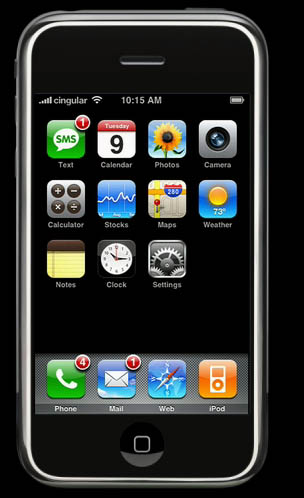
Apple Inc. launched the iPod in 2001 and has sold more than 90 million of the devices worldwide, according to the company. Because many students are familiar with the use of MP3 players, universities are seizing on the technology.
"We're definitely seeing its growth in education," said Stan Ng, senior director of iPod product marketing at Apple. "It just doesn't have to be music, shows and movies."
More than 100 universities use iTunes U, a free content distribution service hosted by Apple, and dozens of other colleges use their own servers to allow students to download content to their iPods, Ng said.
Duke University, which announced in 2004 that it would be giving free iPods to all incoming freshmen that year, has had a mostly positive experience.
"It generated a lot of very creative teaching and also very creative learning," said Lynne O'Brien, director of the Center for Instructional Technology at Duke.
Duke has since revised its iPod policy and is now making the device available for a discounted price of $99 only to students taking courses that require it.
At Atlanta's Emory University, chemistry professor Justin Gallivan remembers noticing about two years ago that students in his biochemistry class brought tape recorders and iPods to record lectures.
So he bought an iPod and a $39 microphone and started recording the class so students could download his lectures.
Later he added video recording so students can see what he writes in class.
Has attendance slacked?
Not at all, said Gallivan.
"There are still reasons to go to class. It's not a replacement, it's a supplement."
Georgia College & State University in Milledgeville has found many creative uses that go beyond lectures since it incorporated iPod use in 2002. History students watch videos about historical figures and make documentaries; music students podcast the music library; and journalism students create podcast series.
"It's not a passive device. Students are actually engaged in the activity," said Jim Wolfgang, director of the Georgia Digital Innovation Group, part of the University System of Georgia.
But do students learn as much?
Last year, Jim Foley, a professor of computer science at Georgia Tech, decided to try to answer that question by testing two different learning techniques in an advanced computer science class.
One section was taught with in-class lectures; in the other section, students viewed the lectures before class on iPods or laptops.
The lecture content, homework and exams were the same for both groups.
Foley, who is repeating the experiment this semester, found that students using iPods or laptops scored grades about 10 percent better than the in-class lecture section.
He thinks it's because with the lecture out of the way, there is more time for meaningful discussion in the classroom.
The University of Georgia is trying to figure out how to make the best use of the technology.
"When you talk to faculty members [about] using an iPod in their class, it raises their hackles," said Scott Shamp, director of the New Media Institute at Georgia.
Interaction with diverse people is important in the learning experience, he said.
"We can't develop a technology that will take our students totally out of the classroom," he said.
For now, Shamp puts some of his lectures for his new media class online, but the audio is not always synchronized to the visual presentation that accompanies it.
"The challenge is finding the right way to use it in classrooms," Shamp said. "I'm still trying to figure that one out."


People ask me, "How can I get our employees to be passionate about the company?" Wrong question. Passion for our employer, manager, current job? Irrelevant. Passion for our profession and the kind of work we do? Crucial.
Imagine a world where every online store sells DRM-free music encoded in open licensable formats. In such a world, any player can play music purchased from any store, and any store can sell music which is playable on all players. This is clearly the best alternative for consumers, and Apple would embrace it in a heartbeat. If the big four music companies would license Apple their music without the requirement that it be protected with a DRM, we would switch to selling only DRM-free music on our iTunes store. Every iPod ever made will play this DRM-free music. [...]
So if the music companies are selling over 90 percent of their music DRM-free, what benefits do they get from selling the remaining small percentage of their music encumbered with a DRM system? There appear to be none. If anything, the technical expertise and overhead required to create, operate and update a DRM system has limited the number of participants selling DRM protected music. If such requirements were removed, the music industry might experience an influx of new companies willing to invest in innovative new stores and players. This can only be seen as a positive by the music companies.
Much of the concern over DRM systems has arisen in European countries. Perhaps those unhappy with the current situation should redirect their energies towards persuading the music companies to sell their music DRM-free. For Europeans, two and a half of the big four music companies are located right in their backyard. The largest, Universal, is 100% owned by Vivendi, a French company. EMI is a British company, and Sony BMG is 50% owned by Bertelsmann, a German company. Convincing them to license their music to Apple and others DRM-free will create a truly interoperable music marketplace. Apple will embrace this wholeheartedly.
Princeton University has become the 12th major library system to join Google's ambitious, sometimes-controversial project to scan the world's great literary works and make them searchable over the Web.

E-LEARNING firm Blackboard said it has pledged to never use its software patents against open source or hom grown course management systems.
That follows a bit of a ruckus the other week - after a request from the Software Freedom Law Center from the US Patent Office for a re-examination of a patent was granted.
Blackboard said its pledge is legally binding, irrevocable and worldwide in scope.
It has committed not to assert patent number 6,988,138 and other pending patents against the development, use or distribution of open source software as long as such systems aren't bundled with proprietary software.
Let's imagine August 2010 at Excellent College (EC), a liberal arts institution of 2,000 undergraduates and 200 faculty. The college has decided to stop funding its library. Instead, it will give students a tuition rebate and give faculty a stipend representing their share of the annual amount that would previously have gone to support the library's collections, facilities, and staff—about $2.7 million total. Each student and faculty member will get $1,230. For now, the library building and hard-copy collections will remain in place, student assistants will keep the doors open, and custodians will clean the facility; but database subscriptions will be discontinued, and no other services will be provided. Since the college has a robust honor code, circulation of materials will be on the honor system. Students and faculty will now be on their own to secure the information resources they need to fulfill their responsibilities.

We live in an information-driven world-- one in which access to good information defines success. OAIster's growth to 10 million records takes us one step closer to that goal.
Developed at the University of Michigan's Library, OAIster is a collection of digital scholarly resources. OAIster is also a service that continually gathers these digital resources to remain complete and fresh. As global digital repositories grow, so do OAIster's holdings.
Popular search engines don't have the holdings OAIster does. Theycrawl web pages and index the words on those pages. It's an outstanding technique for fast, broad information from public websites. But scholarly information, the kind researchers use to enrich their work, is generally hidden from these search engines.
OAIster retrieves these otherwise elusive resources by tapping directly into the collections of a variety of institutions using harvesting technology based on the Open Archives Initiative (OAI) Protocol for Metadata Harvesting. These can be images, academic papers, movies and audio files, technical reports, books, as well as preprints (unpublished works that have not yet been peer reviewed). By aggregating these resources, OAIster makes it possible to search across all of them and return the results of a thorough investigation of complete, up-to-date resources.
I'm a librarian in an independent Washington area school. We're doing all the right things. Our class sizes are small. Most graduating seniors gain admission to their college of choice. The facilities are first-rate.
Yet from my vantage point at the reference desk, something is amiss. The books in the library stacks are gathering dust.

Download free recordings of classical music performed live in the museum’s Tapestry Room. These exclusive recordings from our regular concert series feature performances by acclaimed master musicians and up-and-coming young artists. A new program is posted every two weeks, so check back often, or receive automatic updates delivered directly to your computer or portable mp3 player with a free subscription.
You are free to share and reproduce these podcasts, and pass this great classical music along to your friends and family. The same goes for the individual tracks you’ll find sorted by musician and composer in the Music Library. We only ask that you let people know where you found it, and don’t alter the recording or use it commercially.
FairPlay is a digital rights management (DRM) technology created by Apple Inc., built in to the QuickTime multimedia technology and used by the iPod, iTunes, and the iTunes Store. Every file bought from the iTunes Store with iTunes is encoded with FairPlay. It digitally encrypts AAC audio files and prevents users from playing these files on unauthorized computers.
From:Medialooks
Le Grand Content examines the omnipresent PowerPoint-culture in search for its philosophical potential. Intersections and diagrams are assembled to form a grand 'association-chain-massacre'. which challenges itself to answer all questions of the universe and some more. Of course, it totally fails this assignment, but in its failure it still manages to produce some magical nuance and shades between the great topics death, cable tv, emotions and hamsters.
Thanks Presentation Zen

"Kids often do not know how to make a search query. They would rather use an interactive tag cloud and navigate through the cloud to find information. Quintura teaches kids how to search through the cloud of related tags/words/phrases.
Using a keyboard and typing query words in a search box is a barrier for kids. They often make orthographical errors while typing. Then they cannot easily and quickly find what they look for and loose their interest to searching.
It returns too many irrelevant results that disorient children and make them lose attention to an initial search topic while looking [through] those results."
A Pennsylvania start-up says it has the answer to one of the biggest problems in mobile phones: battery life.
After three years of keeping its technology under close guard, Powercast has come to CES 2007 to get consumer and manufacturer attention. Powercast is a radio frequency that is transmitted over a small area, and its energy is "harvested"--wirelessly--to give power to small devices like cell phones.
While it's presented as wireless power, Powercast isn't just a replacement for a universal charger. Instead, it's meant to either continuously charge a battery or replace the need for them altogether.
It works like this: a transmitter can be placed anywhere--in a lamp, for example, that is plugged into the wall and sits on a table. The transmitter in the lamp sends out a continuous, low RF signal. Anything with either AA or AAA batteries set within its range--and equipped with a Powercast receiver, which is the size of your fingernail--will be continuously charged.


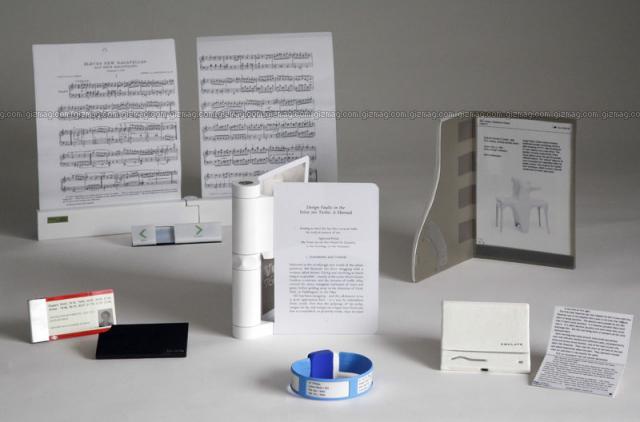
“Even in this age of pervasive digital content, our research shows that consumers are very reluctant to read on laptops, phones and PDAs,” said Simon Jones, Vice President of Product Development at Plastic Logic. “We still carry around enormous amounts of paper. However, people are making less room in their lives for the weight and bulk of paper and are becoming more sensitive to the environmental impact of printing to read. We believe there is a substantial unfulfilled need that Plastic Logic can meet by making digital reading a comfortable and pleasurable experience.”



Flexible-display technology developer Plastic Logic won more than $100 million in new funding to build a manufacturing facility as investors pushed the company to shift its business model away from a licensing strategy to manufacturing its own products.
Plastic's funding is among the largest deals in European venture capital history and is a huge jump in the company's capitalization schedule, having raised a total of $42.3 million in previous funding.
The company expects to begin manufacturing display products midyear 2009, with products shipping by the end of the year.
The initial products will be standalone flexible active-matrix display units that will include connectivity hardware and that are designed to be thin, light and robust, capable of being used anywhere to provide a reading experience as close to paper as possible.
The implications for eBooks is enormous, but these devices not only allow reading, but writing, as well!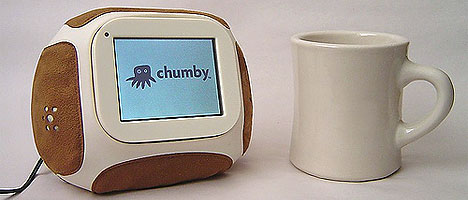









Zotero [zoh-TAIR-oh] is a free, easy-to-use Firefox extension to help you collect, manage, and cite your research sources. It lives right where you do your work — in the web browser itself.
Library Journal is offering a free one year subscription to library school students. All you need is a valid and current student ID. To download a subscription request, go here.

Google is very smart about mobile devices. On a PDA or cell phone, the Google search experience has been, for quite a while, very different than it is on a full-size screen. Google even parses Web pages it links to and tries to repackage them in a mobile-friendly way. (To force the Google mobile version, go to www.google.com/m.)
Gmail, though, has not been a great experience on mobile devices. But on Thursday Google released a mobile Java Gmail application for cell phones that makes using your Gmail account much easier. The new app--which will be preloaded onto some new Sprint phones, or available for download for anyone else who has a Java-capable phone here--is a very good mobile version of the Gmail Web app. The app gives Gmail its own custom menu system, which is much easier to navigate than a Web-based app would be on a cell phone. Gmail's message threading also shows up clearly, and the site displays attachments (like photos, Word documents) in the app.
National Novel Writing Month is a fun, seat-of-your-pants approach to novel writing. Participants begin writing November 1. The goal is to write a 175-page (50,000-word) novel by midnight, November 30.
Valuing enthusiasm and perseverance over painstaking craft, NaNoWriMo is a novel-writing program for everyone who has thought fleetingly about writing a novel but has been scared away by the time and effort involved.
Because of the limited writing window, the ONLY thing that matters in NaNoWriMo is output. It's all about quantity, not quality. The kamikaze approach forces you to lower your expectations, take risks, and write on the fly.
Make no mistake: You will be writing a lot of crap. And that's a good thing. By forcing yourself to write so intensely, you are giving yourself permission to make mistakes. To forgo the endless tweaking and editing and just create. To build without tearing down.


